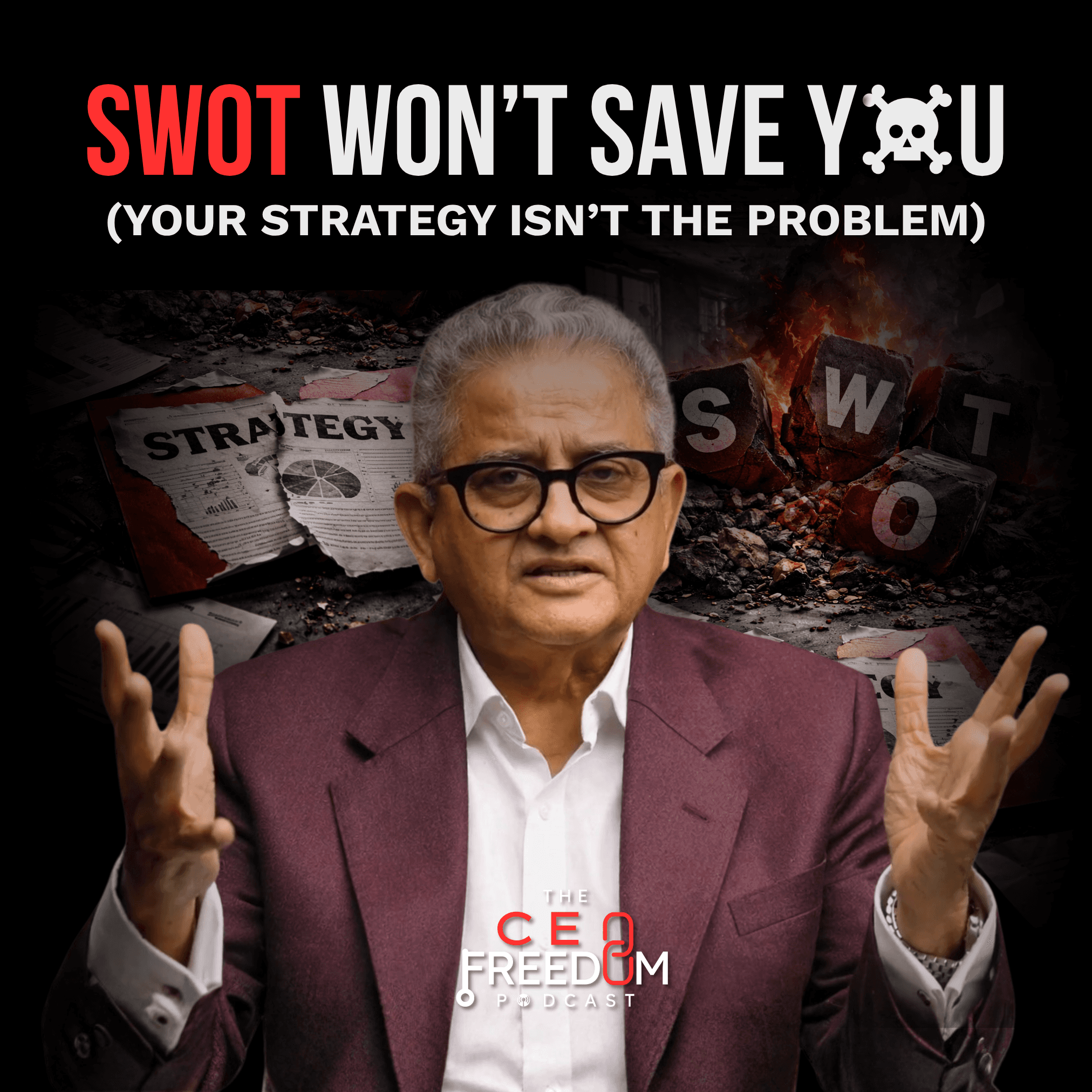
You hired well, built the systems and put in the hours, and growth is still slowing. On the Catalytic Leadership Podcast, Rajesh Nagjee tells Dr. William Attaway why: in many companies the CEO has become the bottleneck.
Rajesh describes the velocity crisis, the growing gap between a company's systems and the leader's ability to operate at that scale. He explains how fear, stress and decision fatigue lower the quality of a CEO's decisions, and how that slows strategy, people, execution and cash. The conversation covers delegating ownership in place of tasks, operating from the present-future instead of the past, and building a business that lasts beyond the founder.
What This Episode Covers
Why most businesses stop growing despite capable founders
What the velocity crisis is and how it affects scaling
How CEOs become the bottleneck without noticing
The difference between inner-game interference and outer-game performance
Why decision quality drives strategy, people, execution, and cash
How delegation moves from tasks to ownership as a company scales
Why leaders operate better from the present-future than from the past
Key Ideas From The Conversation
Why does growth slow when a founder is doing everything right? In many companies the CEO has become the bottleneck. Fear, stress, and decision fatigue lower the quality of the CEO's decisions, and that slows strategy, people, execution, and cash.
What is the velocity crisis? Rajesh Nagjee's name for the growing gap between a company's systems and the leader's ability to operate at that scale.


Dr. Attaway is an executive coach, leadership strategist, and host of the Catalytic Leadership Podcast. He works with high-performing entrepreneurs and leaders to improve clarity, productivity, and leadership effectiveness. Catalytic Leadership ranks among the top 1.5% of podcasts globally, featuring conversations with leaders who turn challenges into growth opportunities.
Explore Related Insights