Every leap in technology sparks the same fear: replacement.
First, machines replaced manual labor.
Then, software displaced specialists.
Now, the spotlight is on AI and the question is whether it will replace leaders
The logic follows a familiar track: If intelligence can be simulated, why not leadership?
Here’s the flaw: CEOs are not hired for raw intelligence.
They are hired for judgment, the kind that cannot be coded
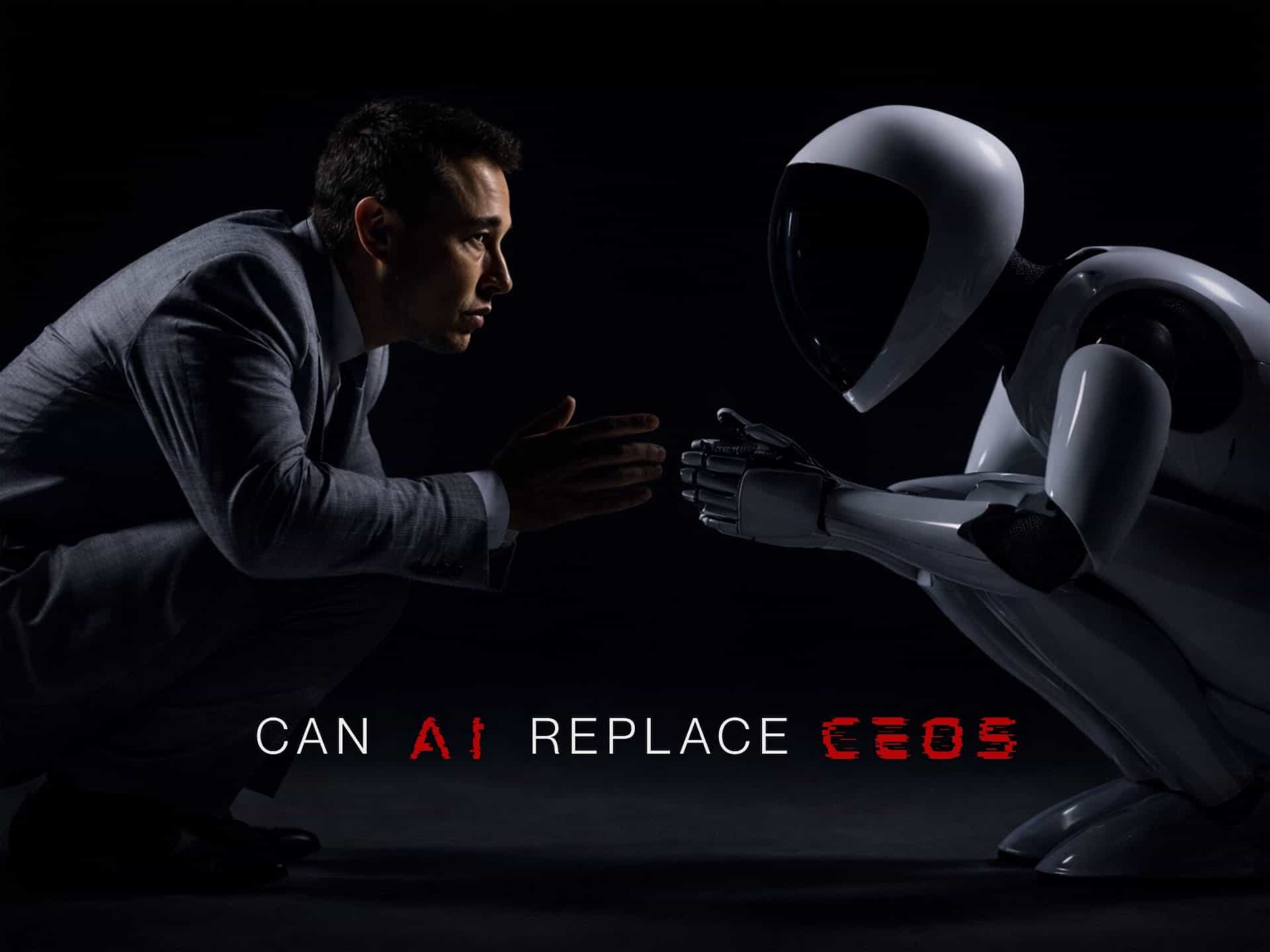
Can AI Replace Human CEOs?
The usual arguments in favor go like this:
AI processes more data, faster
AI reduces human bias
AI optimizes decisions
All true.
And still not enough.
They describe decision support.
Not decision ownership.
AI can already draft the board pack, model the scenarios, and summarise every customer call. What it can't do is decide which risk the company takes, carry the room when the numbers point two ways, or own the consequences. That is still the CEO's job, and AI is making it more visible, not smaller.
Leadership lives in the gaps: when data is incomplete, when incentives conflict, when people disagree, and when stakes reach beyond what any model predicts.
AI can recommend a decision, but it cannot take responsibility for it.
When a decision fails, accountability does not roll back to code.
It lands on the human who approved it.
That responsibility cannot be automated.
What Makes Great CEOs Irreplaceable
If AI could replace CEOs, it would have already happened.
It has not, because leadership requires capacities that resist automation.
1. Judgment in Ambiguity
AI works best in patterns. CEOs lead when patterns break.
Markets shift.
People fail.
Trust erodes.
These are not data problems.
They demand judgment under asymmetric risk, where there’s no perfect choice.
2. Emotional Command
Leadership isn’t about staying detached. It’s about staying grounded.
Great CEOs absorb pressure instead of amplifying it.
They remain steady, so the organization does not fragment under stress.
Being calm is not a personality trait. It is a practiced discipline.
3. Meaning-Making
Leadership establishes intent.
CEOs define what matters, what does not, and what will not be compromised, even when it costs speed or profit. That clarity shapes the future more than any algorithm.
AI as Assistant, Not Leader
AI enhances execution. It expands awareness. It even sharpens decisions.
But it can’t lead.
Effective CEOs use AI to:
surface blind spots
stress-test decisions
reduce operational noise
See patterns faster
But leaders still make the call. And they own the result.
Signals AI Misses and Why They Matter
AI reads patterns.
Leaders read context.
AI cannot detect:
hesitation before an honest answer
disengagement behind polite compliance
the difference between agreement and quiet resistance
These human signals don’t show up on dashboards.
They live in conversations, tone, and timing.
Most leadership failures begin with missed signals.
And those can’t be automated.
The Ethics of AI-Led Leadership
AI doesn’t eliminate risk. It redistributes it.
When an algorithm harms, the human inputs still matter:
Who picked the data?
Who set the goal?
Who signed off?
Leadership is about standing behind consequences. That job can’t be delegated.
Human–AI Collaboration in the C-Suite
This is not human versus machine.
It is a shift from leadership versus AI to leadership with AI.
Smart organizations are already:
Using AI to improve visibility
Reserving judgment for humans
Separating insight from authority
Training leaders to think in systems
Leadership is not being replaced. It’s being redefined.
Case Studies: AI in Leadership Roles
A few organizations have experimented with AI in executive roles. The results are instructive.
NetDragon Websoft’s AI CEO (Tang Yu)
NetDragon appointed an AI system as CEO of a subsidiary to improve operational efficiency.
Where it helped:
Improved process consistency
Faster internal reporting
Fewer delays
Where it fell short:
No leadership in culture or trust
Couldn’t navigate trade-offs
Still needed humans for strategy
The AI acted as an optimizer, not a leader.
Marshall Bot (AI HR leadership assistant)
Marshall Bot was deployed to handle feedback loops, performance nudges, and communication prompts.
Strengths:
Amplified routine leadership behaviors
Reduced managerial blind spots
Increased feedback frequency
Limitations:
Could not handle conflict
Could not resolve ambiguity
Could not replace human judgment in sensitive decisions
In both cases, AI increased management leverage.
Leadership authority remained human.
Preparing C-Suite Leaders for the AI Future
The danger isn’t replacement. It’s leaders who don’t evolve.
The future demands CEOs who:
Move beyond intuition to structured thinking
Build thinking teams, not just loyal ones
Stop being the system and start designing it
Those who struggle with AI are often the ones already stuck in reactive mode.
The ELEVATE Model: Leadership Built for the AI Era
To lead effectively in an AI-accelerated world, CEOs need to evolve across six dimensions:
E - Elevation
Shift from operator to system architect.
L - Leverage
Use AI to amplify insight, not to abdicate decisions.
E - Emotional Command
Regulate yourself to stabilize others
V - Visibility
Replace activity tracking with truth-revealing dashboards.
A - Accountability
Keep ownership of decisions explicit and human.
T - Transferability
Design systems that work without constant CEO presence.
E - Endurance
Hold clarity through stress, scale, and cycles.
AI doesn’t make leaders obsolete. It makes weak leadership visible.
Your Next Step: Don’t Race AI. Redesign Leadership.
The shift is real. AI has changed the game.
AI hasn’t replaced CEOs. But it has made outdated leadership systems more visible.
It exposes cluttered thinking. Delayed decisions. Bottlenecks that keep finding their way back to you.
These are signs of a system problem. Not a leadership trait.
You fix them with structure.
Start with a clear diagnosis.
The CEO Freedom Assessment gives you a clear view of where execution breaks down, where ownership is missing, and where decisions get stuck.
No guesswork. Just clarity you can act on.
If you’re serious about building a business that doesn’t depend on constant intervention, this is where to start.